



Some losses come with a funeral. People bring food. They hug you. They say, "I'm so sorry for your loss." Some rituals help you begin to make sense of what has happened. But some losses don't look like loss at all. They're the kind that keep you awake at night, staring at your phone, wondering …
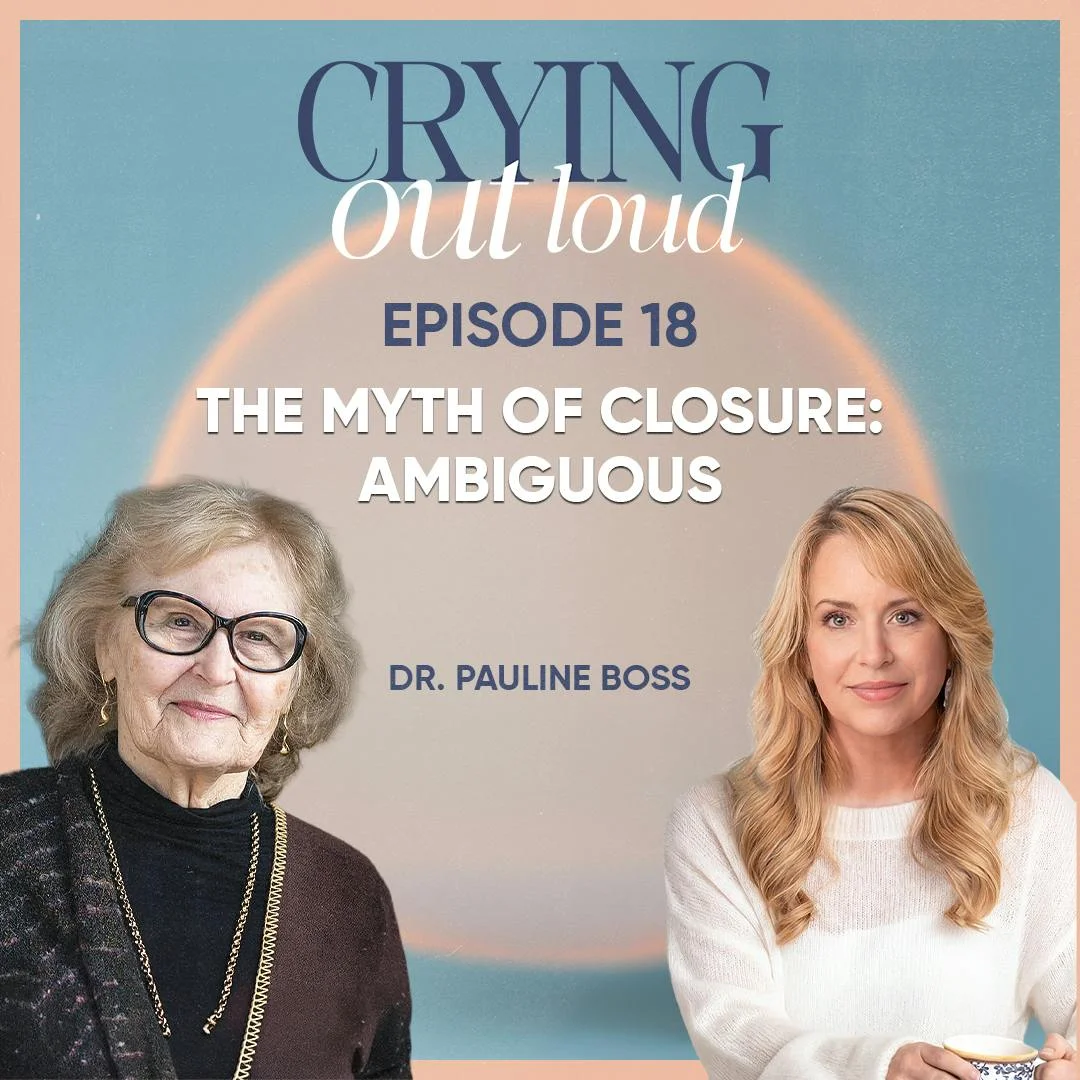
0:00 / 45:19
Some losses come with a funeral. People bring food. They hug you. They say, “I’m so sorry for your loss.” Some rituals help you begin to make sense of what has happened.
But some losses don’t look like loss at all.
They’re the kind that keep you awake at night, staring at your phone, wondering if it will ring. They’re the kind where your child is still alive, but addiction has taken so much of who they used to be. Or where your husband or wife still sits across from you at the dinner table, but Alzheimer’s has slowly stolen the person you spent your life building memories with.
You find yourself missing someone who is still here.
You keep hoping that tomorrow will be different. That they’ll come back to you. That you’ll hear their laugh again, see that familiar spark in their eyes, have one more conversation that feels like the old days.
And because they’re still alive, people don’t always see your grief.
There’s no funeral. No obituary. No clear moment when everyone agrees your life has changed forever. You’re left carrying heartbreak that has no ceremony, no roadmap, and often, no words.
You’re grieving someone who hasn’t died, and at the same time, you’re holding onto hope that maybe you haven’t lost them completely.
For more than fifty years, my guest in this episode has been giving that experience a name.
Dr. Pauline Boss is a family therapist, researcher, and professor emerita at the University of Minnesota. She coined the term ambiguous loss, a concept that changed how we understand grief without an ending. It began with her research on the wives of soldiers missing in Vietnam, and it has since become the framework millions turn to for the losses that don’t come with a clear before and after: a parent lost to dementia, a child in the grip of addiction, a family torn apart by estrangement, a loved one who simply goes missing. She’s the author of several landmark books, including Ambiguous Loss, Loving Someone Who Has Dementia, and her most recent, The Myth of Closure: Ambiguous Loss in a Time of Pandemic and Change.
Her most radical idea may be her simplest: closure is a myth. And chasing it may be keeping you from actually healing.
In this Language of Love Conversation, I sit down with Dr. Boss to talk about what it means to grieve someone who is still, in some sense, unaccounted for. She walks me through the six pillars she’s identified for building a life inside that uncertainty, why “both/and” thinking may be the most freeing shift a grieving person can make, and why the families who cope best are often the ones who stop trying to solve what cannot be solved. I also open up about the night my own son Sammy died, and the lesson my younger son taught me about what it really means to let your children see you grieve.
This episode is for anyone carrying a loss the world doesn’t have a category for, and anyone ready to stop waiting for an ending that isn’t coming so they can start living again.
-
What ambiguous loss is, and why it can be even harder to carry than a loss with clear finality
-
Why âclosureâ is a myth, and how to let go of the pressure to find it.
-
How rituals, continuing bonds, and community can transform the lonely experience of ambiguous loss.
-
Why watching someone you love struggle with addiction is its own form of ambiguous loss, and why that recognition can bring real relief
-
Why “both/and” thinking, holding two opposing truths at once, may be the most honest form of coping
-
The six guideposts Dr. Boss has identified for building resilience without closure
-
Why grief and depression are not the same thing, and why that distinction matters
-
How to memorialize someone when there’s no grave, no headstone, and no clear ending
-
How to support children through ambiguous loss
-
What decades of working with the most unimaginable losses have taught Dr. Boss about the human spirit
To learn more about Dr. Pauline Boss and her work, visit her website, where you’ll find her books, including The Myth of Closure and Ambiguous Loss, along with resources for families and professionals navigating loss without resolution.
If you are moving through grief, heartbreak, or a season of profound change, you do not have to carry it alone. Make sure to read my book, Crying Out Loud: A Path Through Grief Into a Life Reimagined. Also, The Grief Healing Collective offers support, connection, and a community that understands what it means to rebuild a life after loss.
If something in this conversation moved you, reach out at cryingoutloudpod@gmail.com. Healing does not happen in isolation. It happens in moments like this one.


