



Most of us are so afraid of grief that we push it away without even realizing we're doing it. We ignore it, stifle it, cover it up, and tell ourselves we're moving on. But loss doesn't ask for permission. It happens to us, whether we're ready for it or not, and when someone we love …
0:00 / 49:15
Most of us are so afraid of grief that we push it away without even realizing we’re doing it. We ignore it, stifle it, cover it up, and tell ourselves we’re moving on. But loss doesn’t ask for permission. It happens to us, whether we’re ready for it or not, and when someone we love dies, it can leave us feeling like we’ve lost all control. But here’s something we don’t talk about enough: We still have a say in how we grieve.Â
We can choose to show up for the grief instead of running from it, ask for support instead of carrying it alone, and slowly find our footing again. And sometimes, that small sense of agency can change the way we live with the loss.
Claire Bidwell Smith has spent her career teaching other people exactly how to do that. As a licensed therapist, a hospice clinician, and the author of five books, including Conscious Grieving and Anxiety: The Missing Stage of Grief, she has sat across from thousands of grievers and helped them make sense of the chaos loss leaves behind.Â
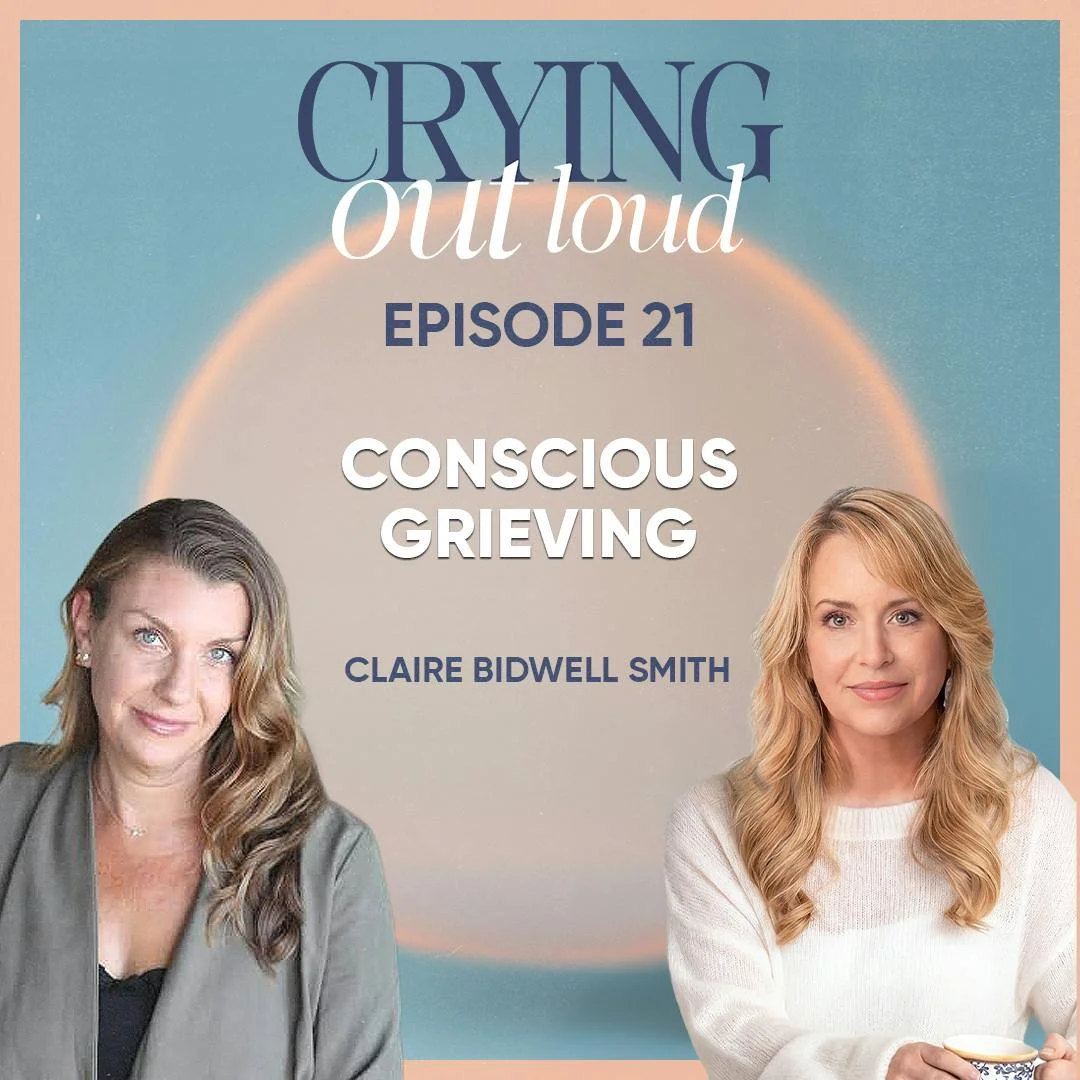
In this episode of Crying Out Loud, Claire and I talk about what she calls conscious grieving: choosing to lean into loss with awareness instead of pushing it down or performing “fine” for everyone watching. We talk about why the body holds onto grief long after the mind tries to move on, why anxiety after loss is so often grief that never found anywhere else to go, and why guilt so often shows up dressed as love.
We also talk about the things people don’t say out loud. The room you can’t walk into. The phone you can’t bring yourself to open. The way grief doesn’t get smaller with time so much as it gets folded into who you become.
There’s a moment in this conversation where Claire and I realize we’ve both made the same choice, refusing to open the phone that belonged to the person we lost. Neither of us could fully explain it in the moment. We didn’t need to. Some things grievers just understand about each other.
If you have ever felt like grief turned you into a stranger in your own body, if you’ve carried guilt you couldn’t quite explain, or if there’s a room in your life you still can’t bring yourself to enter, this conversation will meet you exactly where you are.Â
In this episode, we discuss:
-
What conscious grieving actually means, and how it differs from the grief we’re taught to hide
-
Why anxiety, panic, and physical symptoms are so often grief in disguise
-
The neuroscience of “grief brain” and why your memory, sleep, and focus all take a hit
-
The hidden intersection between grief and hormonal shifts like perimenopause
-
Why guilt can become a way of staying close to the person you lost
-
The difference between honoring someone and punishing yourself in their name
-
Why some rooms, some drawers, some phones take years to face, and why that’s not wrong
-
Simple tools for calming an anxious body in the middle of a spiral, including breathwork and grief writing
-
Claire’s own path from skepticism to a continued, evolving relationship with her mother
-
What it means to keep talking to someone after they’re gone, and why so many grievers already do
-
Why healing was never about leaving anyone behind
Don’t forget to follow Claire Bidwell Smith and check out her books, including Conscious Grieving and Anxiety: The Missing Stage of Grief. You can find more of her work on her website.
And if you’re looking for support, connection, or a place to feel less alone, my book, Crying Out Loud: A Path Through Grief Into a Life Reimagined, and The Grief Healing Collective are here for you. If something in this episode spoke to your heart, share your story or send your questions to cryingoutloudpod@gmail.com.
None of us are meant to carry this alone.


